Inspired by Sybille de Saint Louvent
Sybille de Saint Louvent works with images as a way of understanding how we relate to aesthetics today. Moving between independent practice and collaborations within fashion and visual culture, she has shaped an approach that values subtle tension, emotional presence, and space for interpretation. Her work is informed by personal history as much as by the conditions of the present, a moment where technology, access, and shifting cultural frameworks continually reshape how images are created and experienced.
In this conversation, she reflects on the influences that shaped her sensibility, her interest in what remains partially hidden within an image, and the evolving role of authorship in a digital landscape. Her thoughts move across questions of criticism, generative tools, and creative responsibility, ultimately positioning image-making as an intentional act grounded in awareness, curiosity, and dialogue rather than certainty.
You have spoken about how your parents had two very different ideas of beauty and how their unique perspectives influenced your own worldview on the aesthetic. Can you tell us more about their influences on you and how you developed your own creative voice based on your life history?
I think my relationship to beauty differs from my parents. Their sense of beauty is very pure, discreet, almost restrained. They need beauty to carry meaning; they are not impressed by noise. There is a great delicacy in the way they perceive aesthetics. For a long time(especially from adolescence onward) I tried to push against that.
I found it too smooth, too easy, and I wanted to introduce something more troubling, more sulphurous. But their language has undeniably shaped mine. What I do today is not a rejection of it, but a translation, one that is more at ease with my own generation and my own tools. I am drawn to moments where a shift occurs, where a slight dissonance appears.
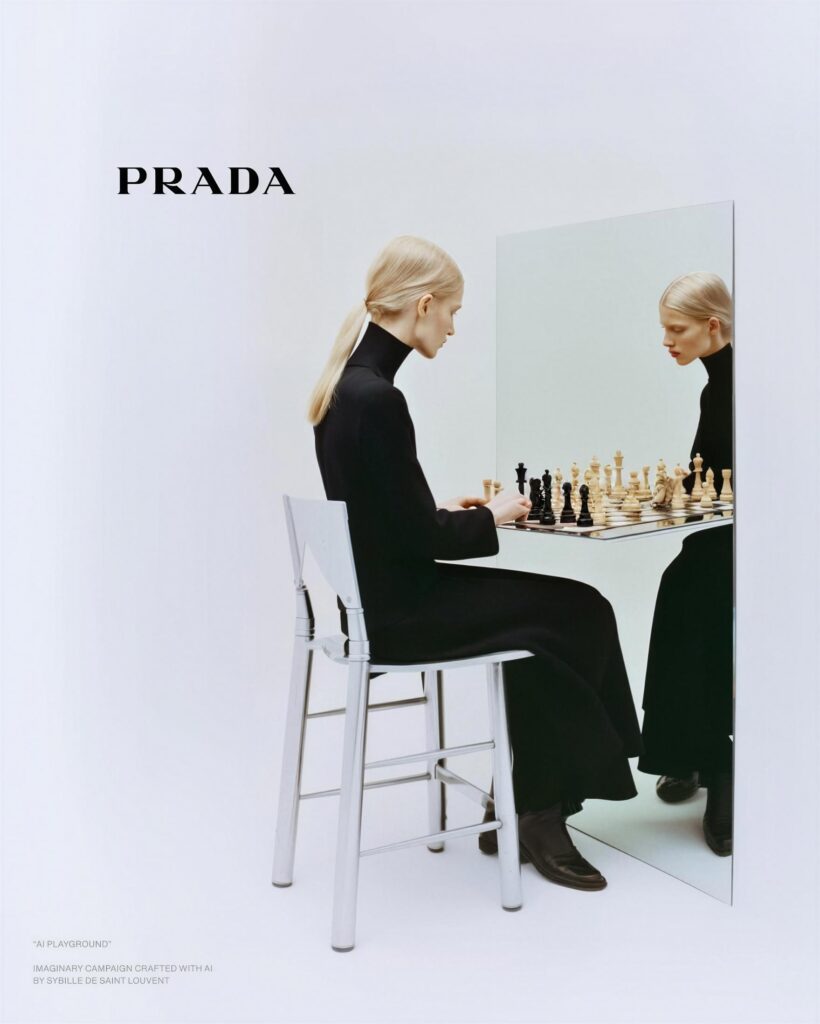
Many of your pieces feature an obscured figure, leading me to believe that mystery or the unknown play a marked role in your inner core concept of personal luxury. What is it about the hidden that meshes with your outlook on creativity?
For me, it’s important to leave a gap in the reading, to leave space for the viewer’s imagination. Of course, that space has to be guided, but I see it as a dialogue, almost a game I try to set up. I don’t like stories that are too literal. I’m drawn to images that act as a kind of key to a mystery. When a visual touches something nostalgic, something tied to memory or to the collective unconscious, it creates an emotional resonance. If everything is explained immediately, very little magic can emerge. What interests me is creating a conversation around an image, leaving deliberate blanks so that the viewer can step in and make it their own.
In the age of egalitarian artistic prowess, the nonconformist has risen to the top because their skills, having now spoken for themselves, have granted a seat at recherché tables, which in the past had to be awarded with a key and a nod. As an “outsider” who stormed the metaphorical Bastille, what power do you feel you retain that others who are under corporate constraints have limited through conformity?
Long before the digital era, the real question was permission. Previous generations often worked within highly structured frameworks, with limited spaces for expression. The digital age didn’t create power; it dismantled barriers. It offered a form of inner authorization. The difference between creating while constantly wondering whether one belongs, and creating because something needs to be said. That freedom also comes with harsher criticism today, and perhaps less margin to exist, but it remains fundamental.
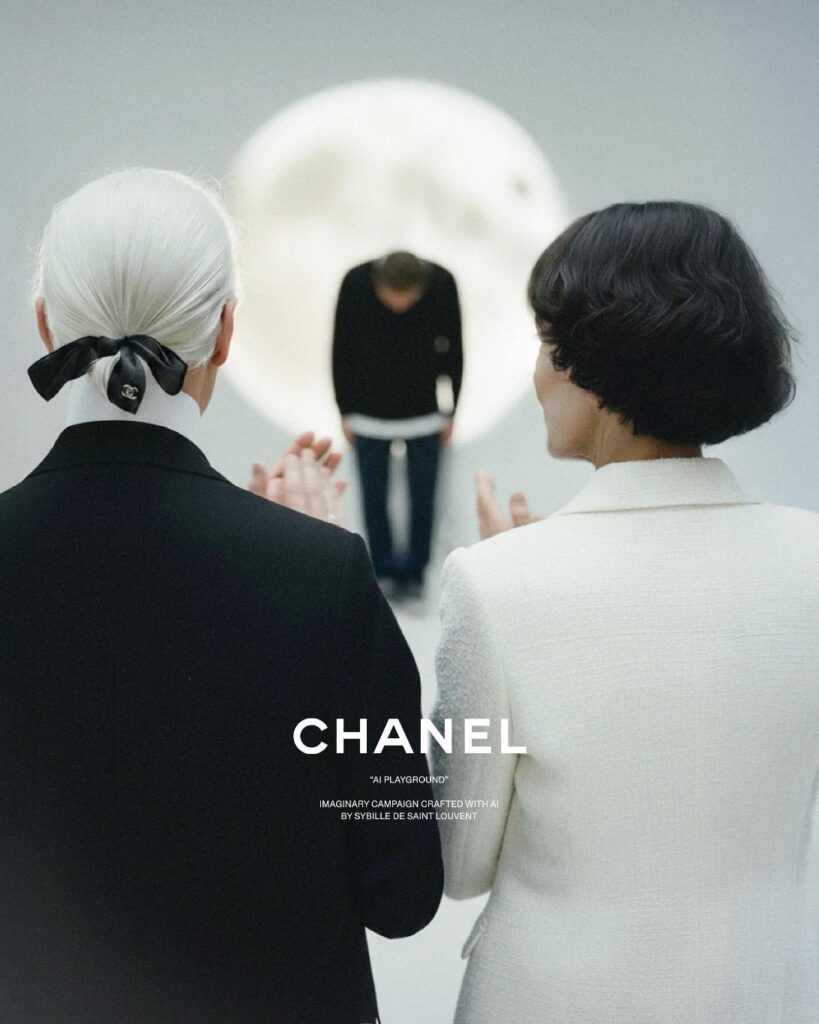
The democratization of media has shifted the balance of power from institutions to private individuals. Having navigated this change from both angles, as a superstar digital native and as a collaborator with legacy brands like Gucci, what do you foresee the new creative landscape looking like in the approaching years?
I don’t believe the future is binary. I believe in the coexistence of two worlds. Heritage brands will retain a strong presence because they embody continuity, an era, a form of stability. In a world evolving at great speed, particularly technologically, we need anchors and familiar references to hold onto.
That said, not everything will survive unchanged. Some institutions will struggle if they treat innovation as a threat rather than a language. Independent profiles are not bound by the same constraints. They are often freer from commercial reflexes, and it is this sincerity that resonates today. Proof through images no longer carries the same weight it once did.
Visual creation has become accessible to everyone, whereas it was once restricted by technical, symbolic, and even moral barriers. I believe this will lead to a recentring. Less production by reflex, less creation for the sake of visibility, and a stronger search for meaning. The institutions that will endure are those capable of opening their platforms to external voices, not as a gesture, but because those voices genuinely align with their values.
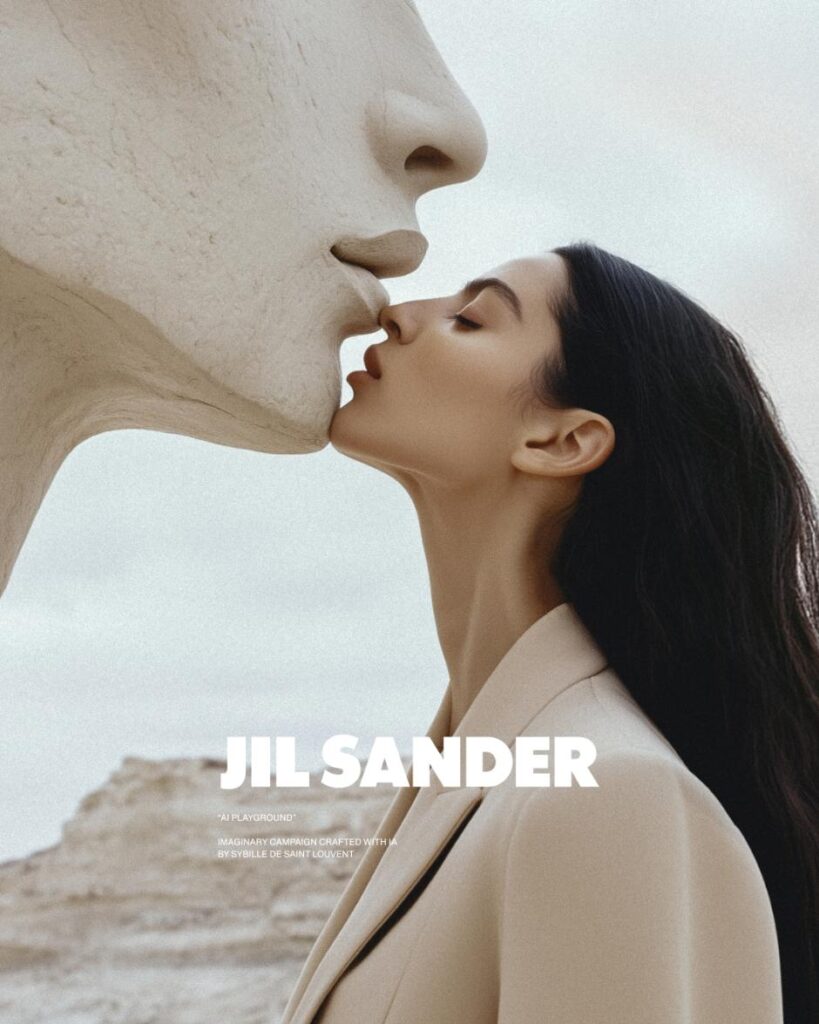
Pretension is big in fashion due to its origins in Aristocratic ideals but also because many of its greats arose from humble beginnings; this creating a tension surrounding meaning and how to protect authenticity whilst existing within such an acknowledged tension. I often see influential opinion makers across art proper looking down upon digital technique as though of a lesser form (because of its supposed ease, eg., digital delegation, such as generative image making by prompt), yet many creative directors themselves hire others to make their ideas real because they lack a multifaceted skill set needed to do it all themselves. What role do you think judgment and criticism play in keeping a culture pure, and, what role does such an attitude play in keeping a culture behind?
This kind of resistance appears with every major innovation. Photography, the automobile, the calculator—each was once perceived as a loss of purity. Perhaps because effort confers a sense of nobility. Before calculators, calculation was collective, rigorous, even exhausting. That shared labor shaped our perception of value.
Yes, prompting introduces ease, and denying that would be dishonest. But ease does not erase intention. Tools don’t replace thinking; they shift where effort is applied. Judgment and critique are necessary for culture to evolve, but they become counterproductive when they block transformation rather than guide it.
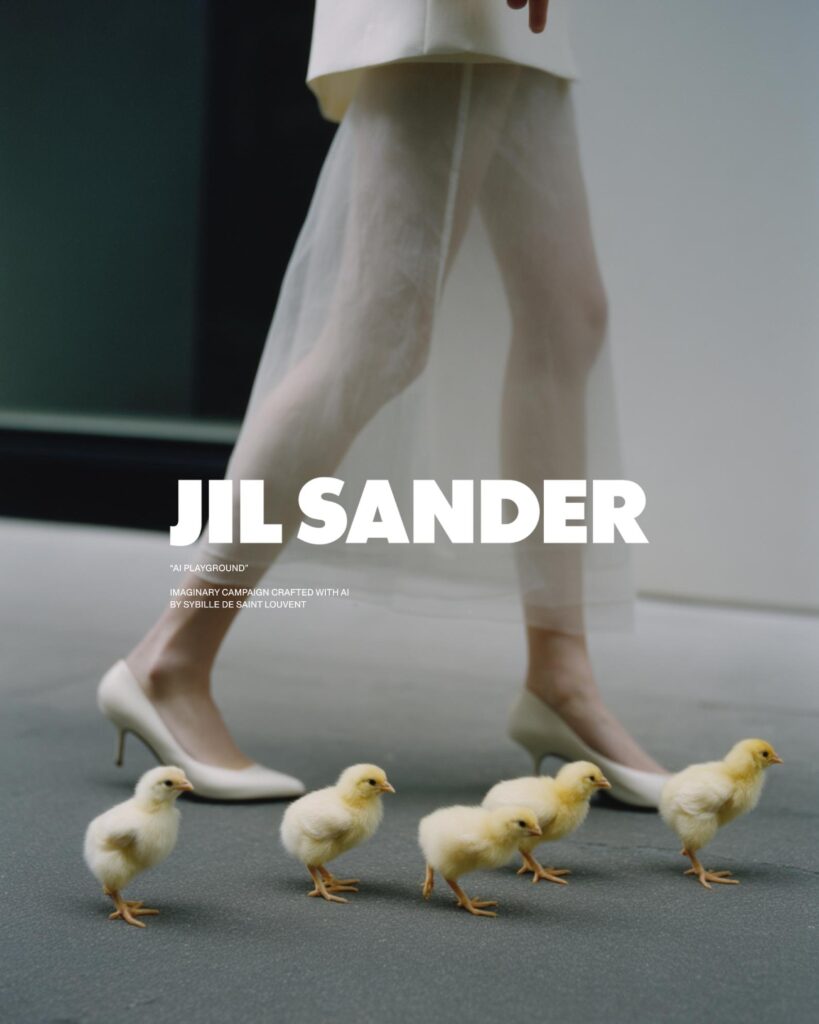
What is your view on the neo ludditian wailings of anti-progressive tech crowds who, for good reason in the past, heard about AI being bad for the environment or that it was trained on stolen IP, but now interact with it on a daily basis unknowingly, often enjoying its fruits? Do you think that some people are afraid of the impending future and so try to stymie it through critique and caring outrage, or do you think this pushback is just a trending, misinformed, subcultural cool signal to be anti-the-next-thing?
I think this kind of reaction is a very classic response to fear. When an innovation disrupts an identity framework, it destabilizes reference points that once felt obvious, because they were deeply embedded in how we think and define ourselves. Reversing that process, accepting that convictions which once structured an identity may no longer be entirely valid, is extremely difficult.
Especially when those convictions have shaped a career, an expertise, sometimes even recognition. There is a real emotional cost to changing one’s mind, and I understand why that can create resistance. But, factually, progress cannot be stopped. The challenge, then, is not to oppose it, but to find ways to accompany it—>with discernment, meaning, and responsibility.
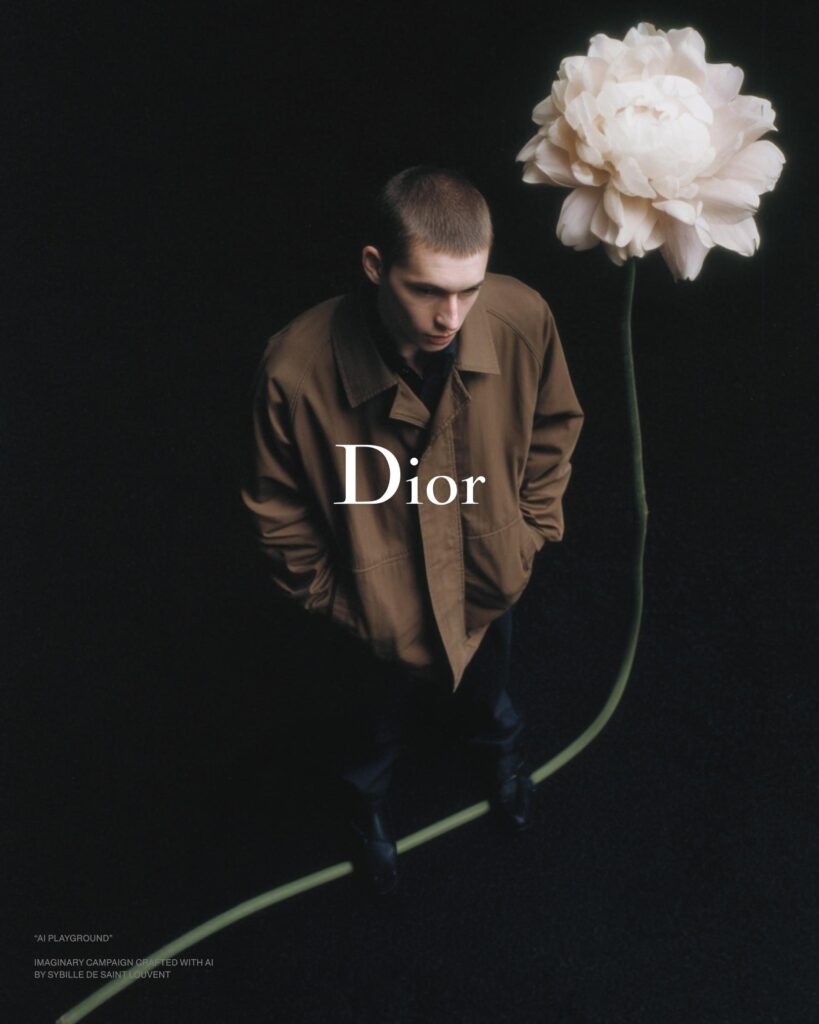
In your Business of Fashion interview, you spoke about ideation and emotionality in generative media. In the early days of generative art, it was difficult to express genuine human feeling through images, but new models can do everything equally as well as any human/photographer duo. Has your opinion changed with the new state-of-the-art models’ capabilities? Why or why not?
Yes, my perspective has evolved. In the early days of generative art, there was something very plastic about it, images capable of telling stories, but sometimes lacking credibility. That said, being close to reality is not a prerequisite for storytelling. Comics are a good example: bodies and faces are not realistic, yet emotion circulates fully.
Today, my view has changed because the tools have progressed dramatically. We can now get very close to certain human emotions, notably through the quality of the dialogue we establish with the tool, and through concrete technical advances, such as skin rendering. But emotion never comes from the machine itself. It comes from what we project onto it: sensitivity, visual culture, references, personal history.
It is the person guiding the process who gives the images their emotional direction. I don’t see photographic work and artificial intelligence as opposing forces. To me, they are two different ways of telling stories. Photography is and will remain extremely relevant. Everything depends on intention and on what one is trying to achieve.
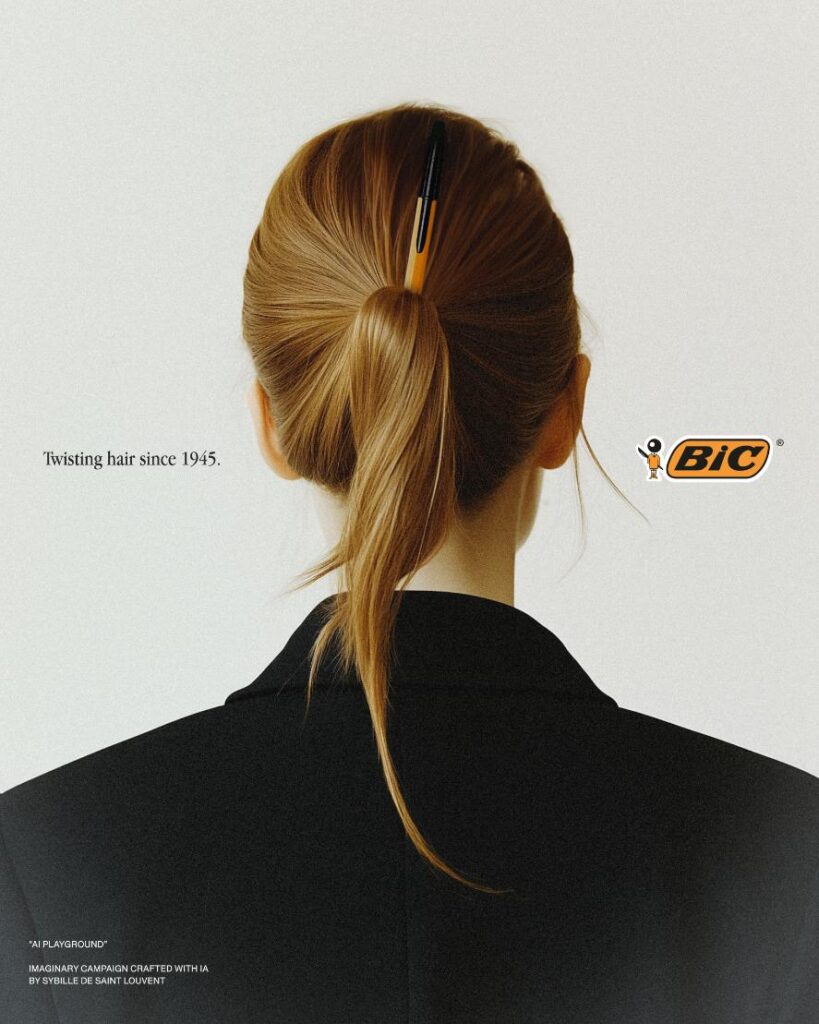
To follow up on the prior question, authorial intent always held apex explanatory power in the arts. However, in our instant media landscape, where memes and misinterpretations and reinterpretations are the bread and butter of youth, if a viewer cannot tell how an image is made and feels something through it, should it be the viewer or the artificer who gets to state the power of an image’s emotional weight, and does such a question ultimately matter?
I think this is a very good question, and I’m not sure I have a definitive answer. I’m not entirely convinced that the emotional power of an artwork necessarily comes from the artist’s intention. I tend to believe that an image, or a piece, should be able to speak for itself, without the author having to explain or justify it. That said, one could also argue that an artwork becomes complete through the relationship between the image and the person who made it, where the author, their story, and their context become part of the narrative. In that sense, the artist is almost an extension of the work.
Take Le Baiser de l’Hôtel de Ville by Robert Doisneau, for example. The image is often perceived as a spontaneous moment, but it was in fact staged as part of a commissioned shoot. Doisneau asked a young couple, then amateur actors, to reenact the gesture in the streets of Paris, producing several images. For me, that revelation doesn’t take anything away from the beauty of the photograph. For others, it disrupts a certain romantic illusion tied to the belief that the moment was entirely candid.
Ultimately, I think the emotional weight of an image depends on the viewer’s perspective. Some people need to know how and why an image was made; others respond purely to what they feel when they encounter it. And perhaps that ambiguity, between intention, perception, and emotion, is precisely where the image finds its strength.
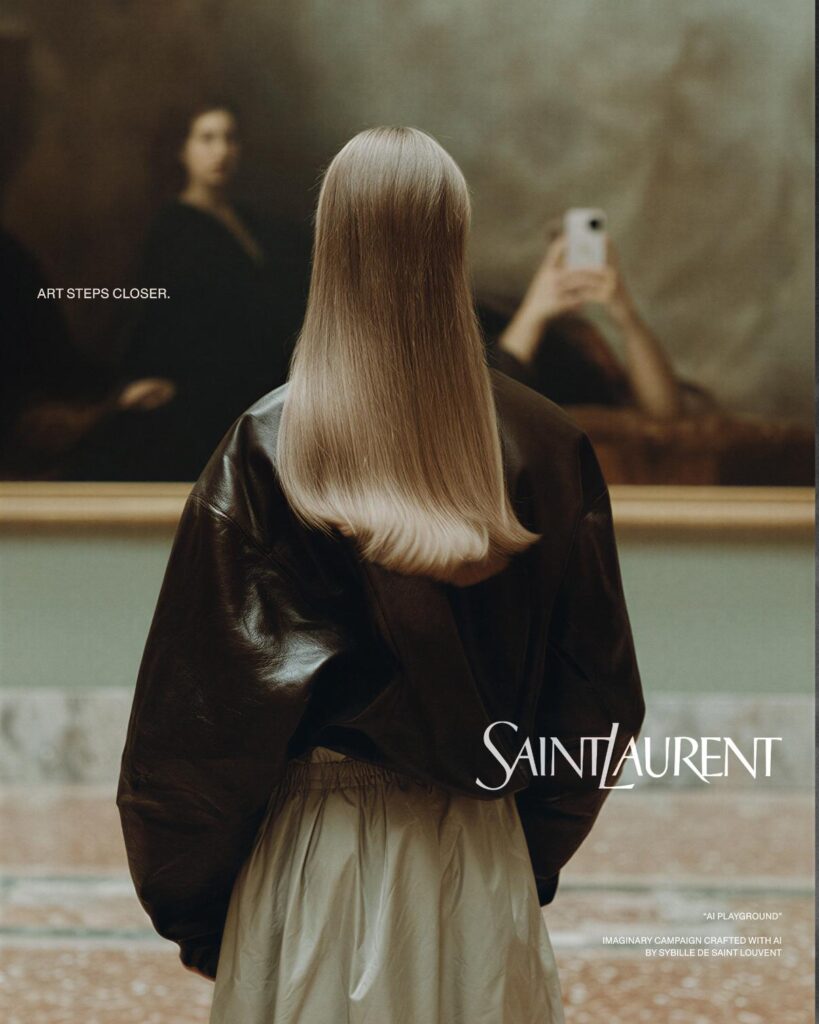
A truth lost on the current purists is that art has always been intertwined with technology. Every disruption, from the camera to digital software, was met with skepticism. Warhol’s Factory used screen printing to elevate concept over artistic labor, at origin Photography and CGI were dismissed as soulless or inauthentic, and now Generative AI is the next step in evolution where the artist’s role shifts from direct manipulation to dialogue with systems complex. How would you convince a non-believer that this is progress, not a Trojan horse? And can you see its detrimental effects, or is there only upside?
I think it’s important to start by acknowledging that there are both positive and negative effects. Pretending this is a frictionless revolution would be dishonest. Generative AI undeniably expands the field of creation: it allows us to step outside what is materially possible, to access forms, atmospheres, and narratives that could not exist otherwise. In that sense, it can reintroduce wonder, not through technical virtuosity, but through imagination. Used with intention, it becomes a tool for artistic exploration rather than mere production.
That said, I’m not blind to its darker side. We are clearly in a frenetic race toward overproduction. There are simply too many images, and a growing part of visual creation is becoming industrial rather than expressive. Images are produced to feed platforms, to satisfy algorithms, to maintain visibility. This logic inevitably drains meaning from what is created, and I personally find it uncomfortable. I don’t believe in producing for the sake of producing, even if I understand why these systems exist.
They respond to a real demand: platforms need constant content to survive, and creators are pressured to keep up. That doesn’t make it desirable, but it does make it real. If I were to convince a skeptic, I wouldn’t argue that AI is “good” by nature. I would argue that it is neutral, and that its value depends entirely on how we choose to use it. Just as photography didn’t eliminate painting, and digital tools didn’t erase craftsmanship, generative AI doesn’t cancel artistic intent. It shifts it.
The artist’s role moves away from execution alone and toward decision-making, editing, authorship, and narrative responsibility. The danger is not the tool itself, but the absence of discernment in its use. So yes, there are detrimental effects, and they should be named clearly. But rejecting the tool outright would mean refusing to engage with the reality of our time. The challenge is not to produce more images, but to produce better ones, with more restraint, more intention, and more meaning. In that sense, progress is not technological; it is ethical and creative.
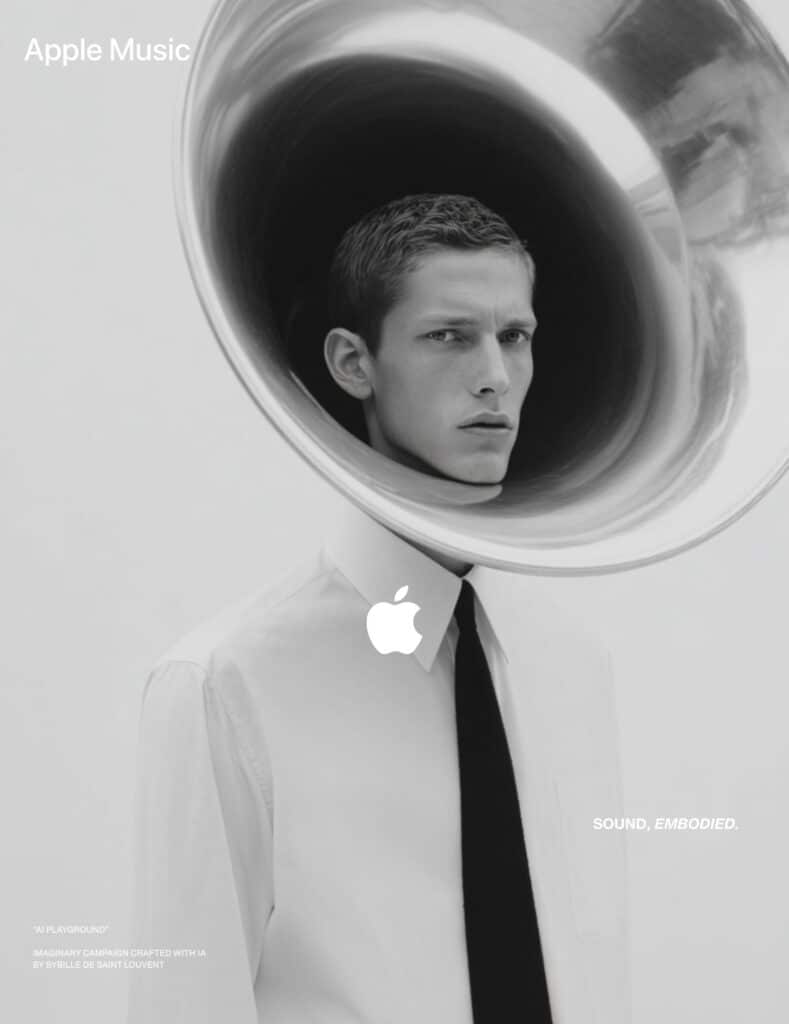
All images courtesy of Sybille de Saint Louvent, shared with permission