Triangle interactive game by Cizzoe Yi Wang on power and choice
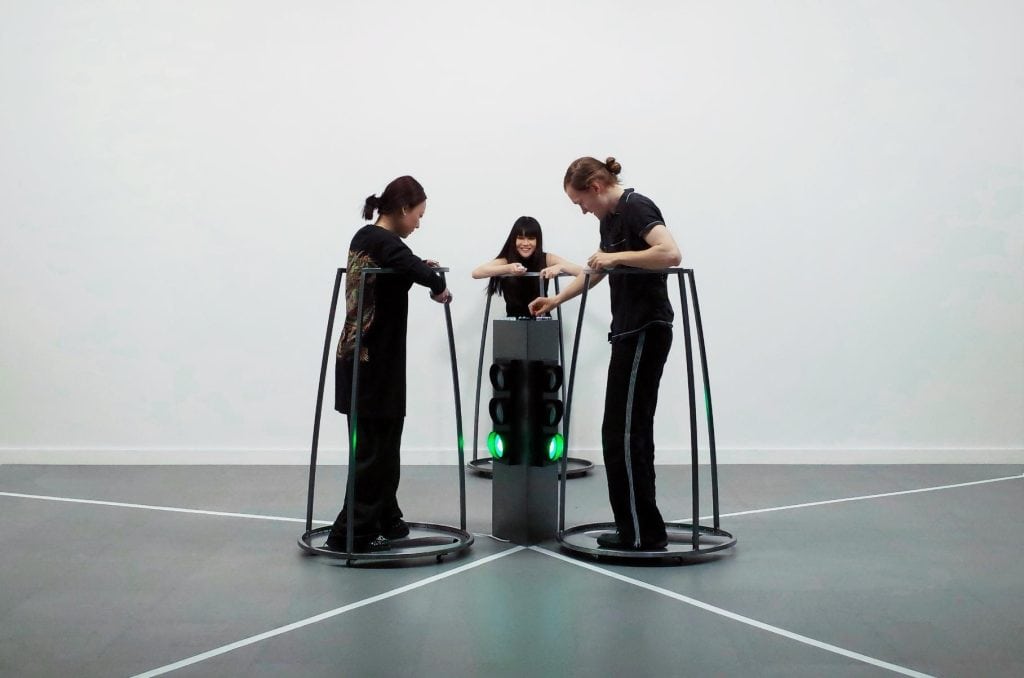
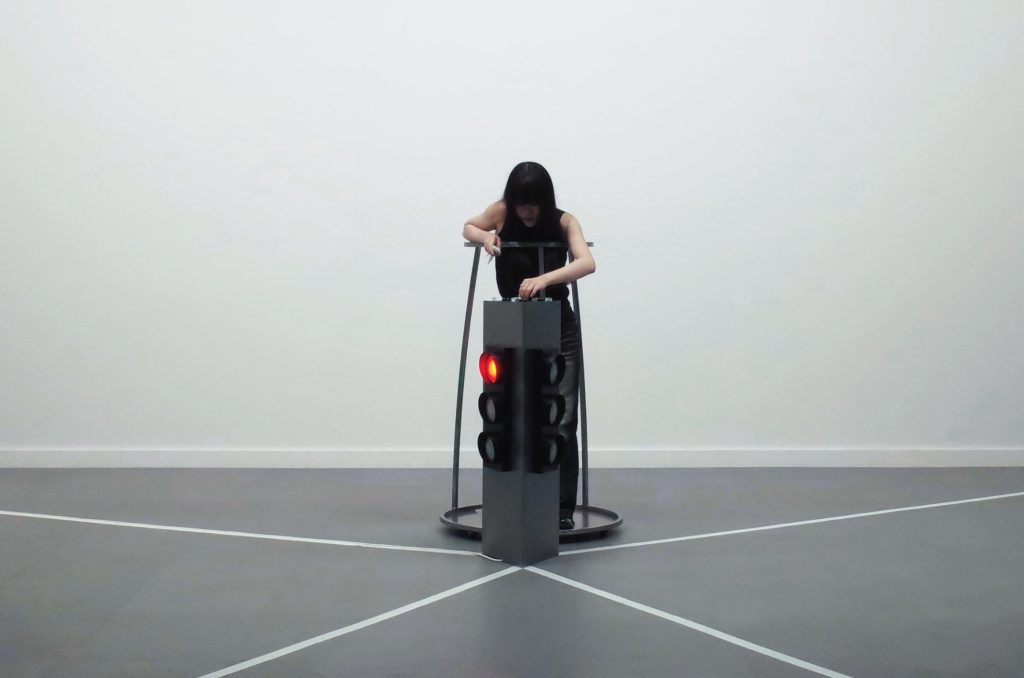
Triangle by Cizzoe Yi Wang is an interactive installation designed as a three-player game where participation, strategy, and withdrawal take on new meaning. The work is structured on a triangular field, each corner representing a starting point for players who advance toward the center.
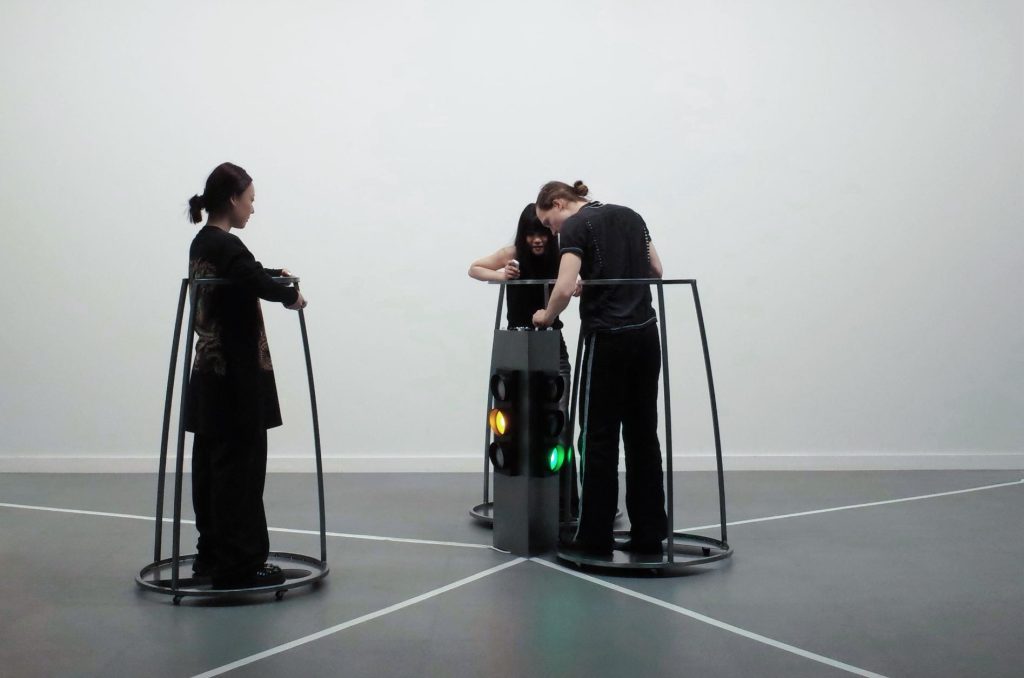
Along the way, participants control and influence one another’s progress through a traffic light system and remote-controlled devices, creating a dynamic balance of autonomy and constraint. Rather than rewarding domination, the game proposes that true victory is achieved by disengaging from cycles of power and resistance.
The Cizzoe Yi Wang’s installation reflects on social interaction and the mechanics of influence. Every move by a participant is met with an opposing action, creating a feedback loop of negotiation and tension. The principle “to win is to withdraw” introduces a paradox in which success depends not on outmaneuvering others but on the ability to step away from escalating competition.
This framework becomes a metaphor for questioning entrenched power structures, suggesting that liberation can emerge from refusal rather than confrontation.
Cizzoe Yi Wang’s concept draws inspiration from alternative sporting models such as three-sided football, where competition challenges conventional binary structures, and from Allan Kaprow’s Happenings, which emphasized lived situations over final outcomes.
The intellectual foundation also resonates with Johan Huizinga’s Homo Ludens, which highlights play as a central force in cultural development. Triangle situates itself at this intersection, transforming structured systems into spaces where unpredictable human behavior generates new forms of interaction.
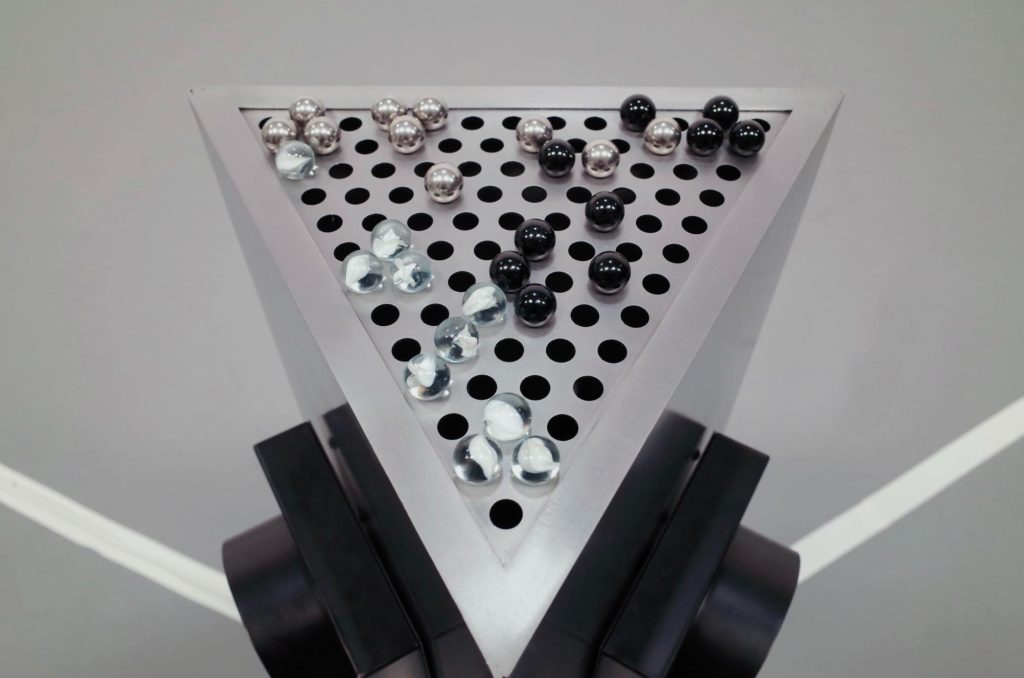
The materiality of the Cizzoe Yi Wang installation underscores its balance of play and sculptural form. Industrial steel is welded by hand to create the geometric framework, embodying precision while retaining the individuality of craftsmanship.
Signal lights, marbles, and remote-control mechanisms provide participants with responsive tools that shape both the physical and psychological dynamics of the game. By combining these elements, Triangle becomes a stage where the fluid nature of control is both enacted and made visible.
Cizzoe Yi Wang, born in 2000 in China and raised in the UK, is an interdisciplinary artist based in London. Her practice moves between installation, performance, sculpture, and documentary filmmaking, shaped by a background in social anthropology. She earned an MA in Contemporary Art Practice from the Royal College of Art in 2024, alongside earlier degrees in ethnographic and documentary film and film practices.
Her works have been presented internationally at institutions such as Tate Modern, Gallery 46, ASC Gallery, and Candid Arts Trust, as well as in performance programs at The Place and the Fitzwilliam Museum. Her installations consistently investigate the structures that govern human behavior, framing art as a system where rules, choices, and resistance reveal the complexities of social life.
All images courtesy of Cizzoe Yi Wang