Maurizio Cattelan turns the Neue Nationalgalerie into a space of memory and uncertainty
Maurizio Cattelan’s NIGHT turns the Neue Nationalgalerie in Berlin into a space shaped by memory, uncertainty and collective observation, bringing together historical works and new commissions inside Mies van der Rohe’s glass hall. Presented as part of the Preis der Nationalgalerie 2026, the exhibition is Cattelan’s first major solo presentation in Germany and uses the architecture as an active part of the installation. Instead of treating the museum as a neutral container, NIGHT responds to its scale, symmetry and transparency, allowing the building to function almost like a contemporary church in which visitors move through a sequence of charged encounters.
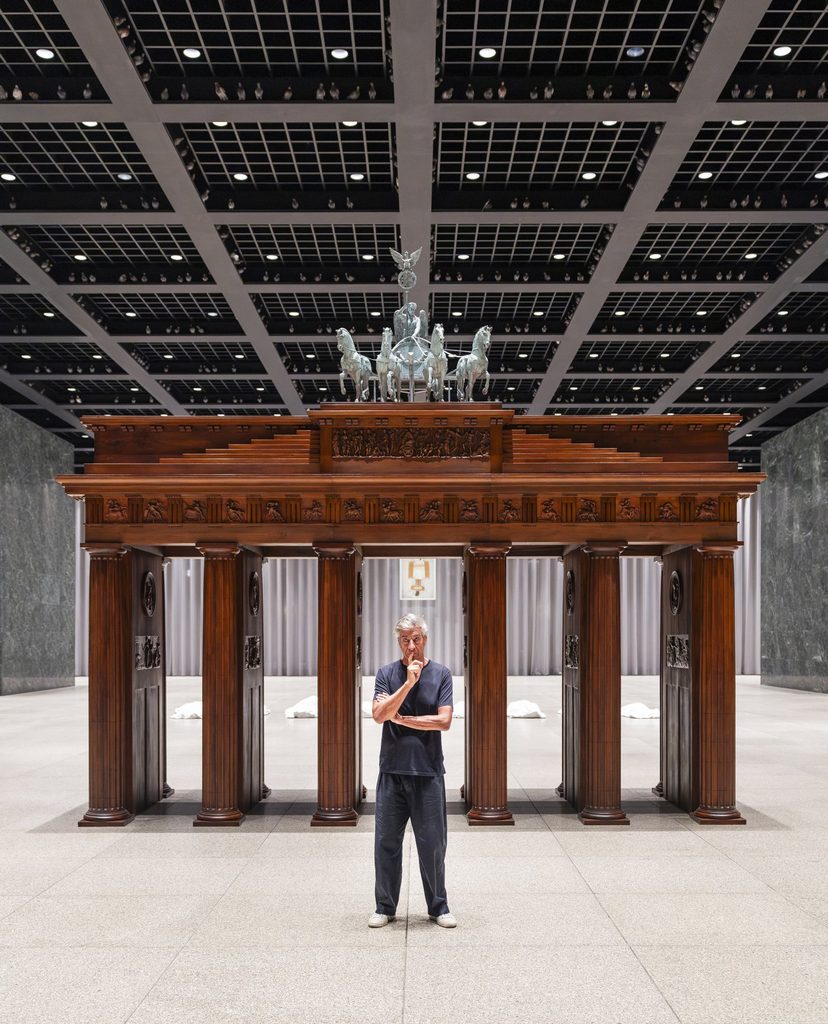
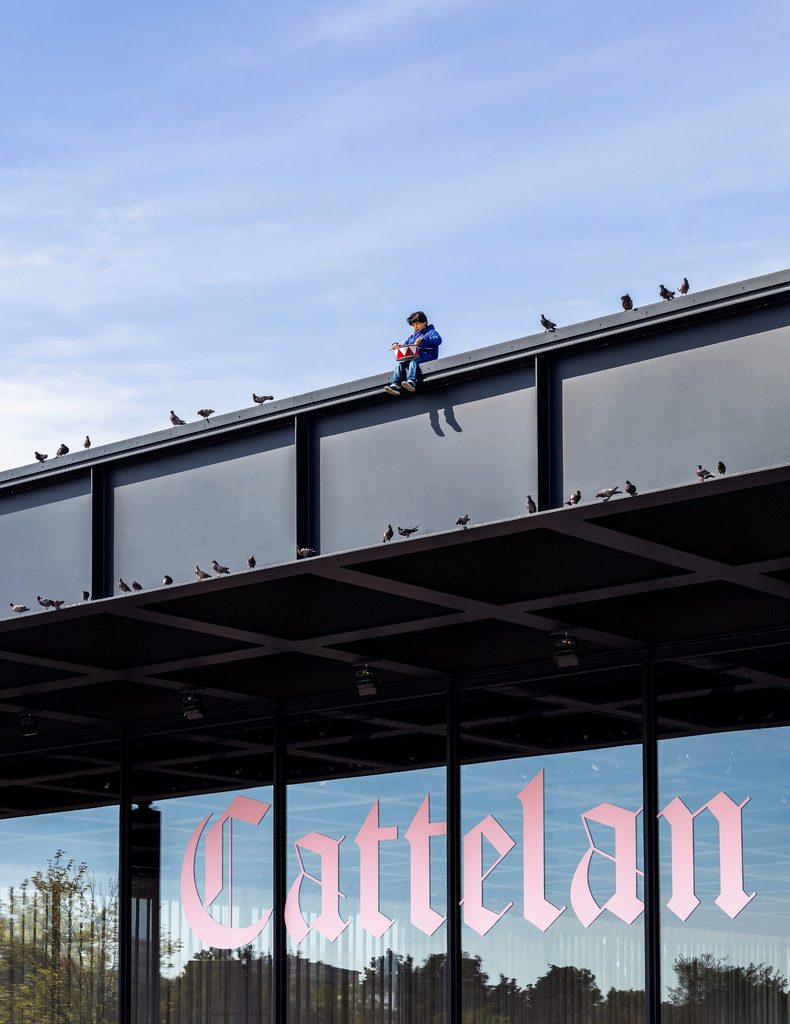
The exhibition begins before entering the glass hall, where works placed on the terrace and roof extend the project into the surrounding city. Inside, visitors pass through Purgatory, a scaled-down Brandenburg Gate that transforms one of Germany’s most recognizable monuments into a threshold rather than a fixed symbol. Its position establishes the tone of the exhibition immediately, introducing a space in which familiar images are displaced and made unstable through changes in scale, context and proximity.
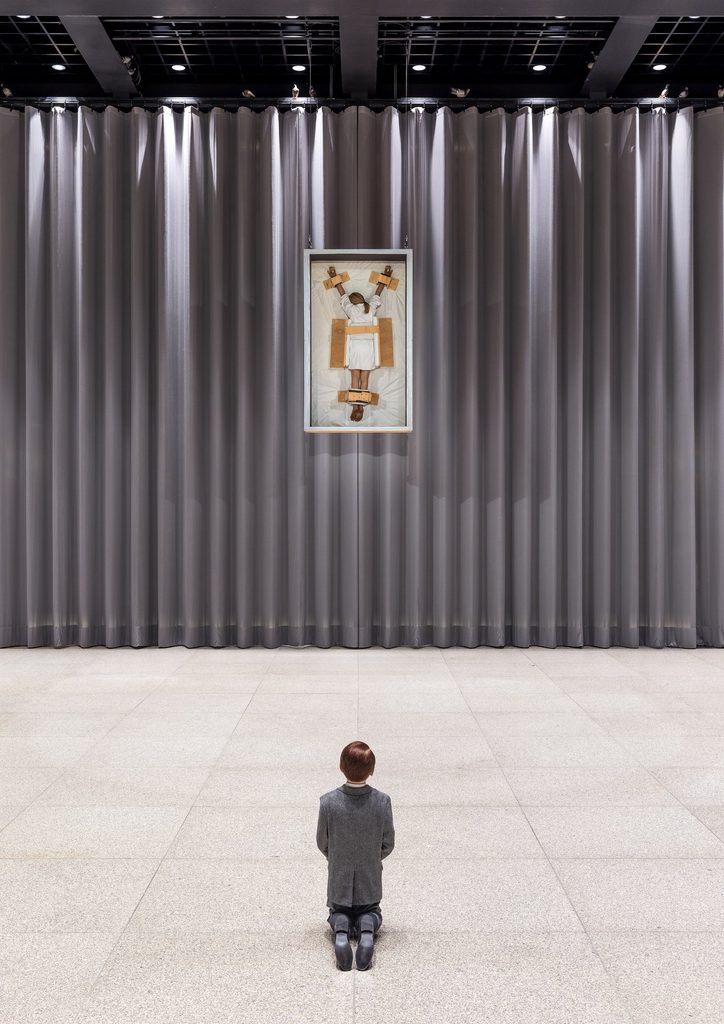
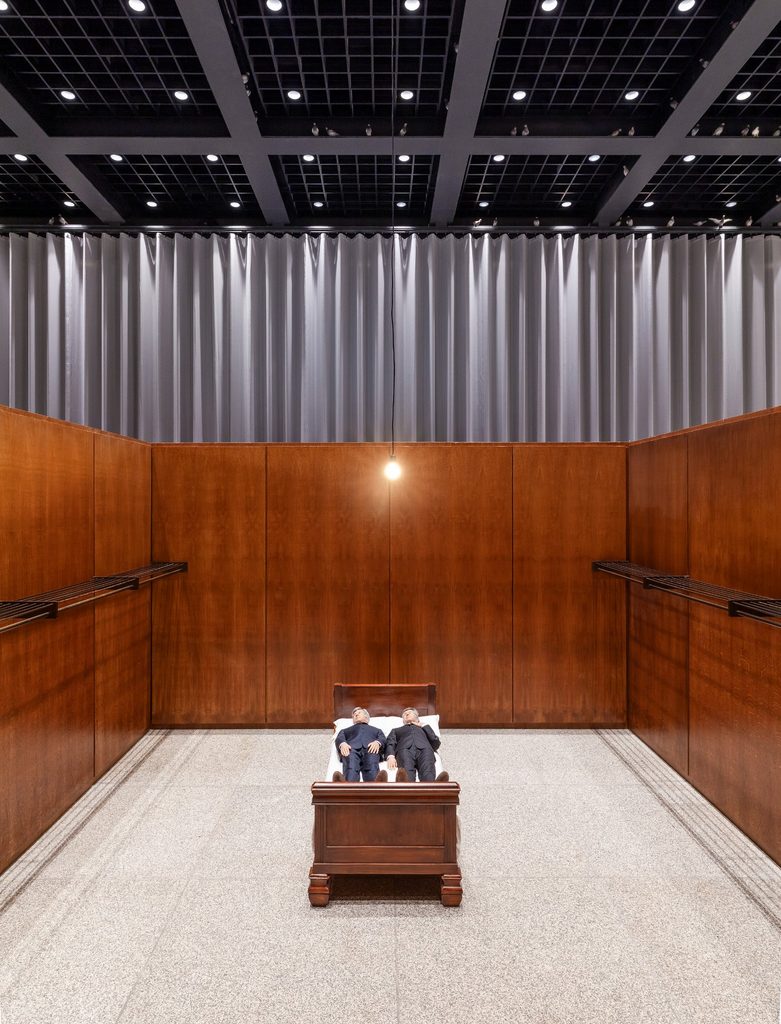
At the centre of the hall, Him creates one of the most unsettling encounters in the exhibition, initially appearing as a kneeling child before revealing the face of Adolf Hitler. Nearby, Dawn introduces a suspended female figure in a cruciform position, while thousands of taxidermied pigeons from People occupy the ceiling structure above. Together, these works turn the open volume of the Neue Nationalgalerie into a layered field of observation, where figures appear to watch, wait or remain immobilized beneath the severe clarity of Mies van der Rohe’s architecture.
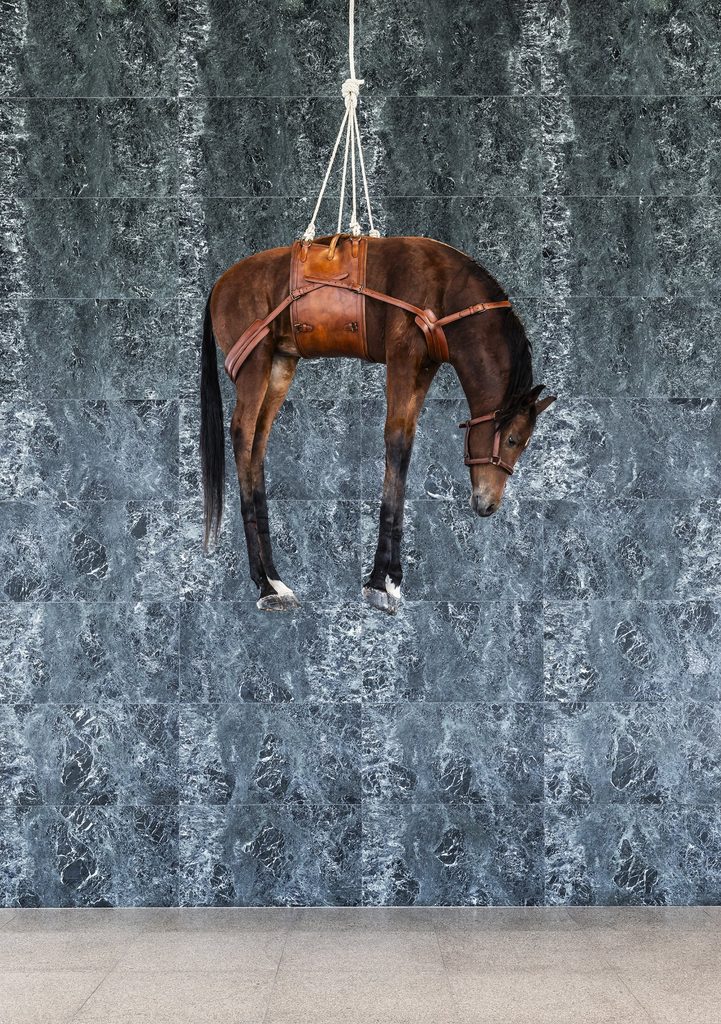
Elsewhere, Cattelan returns to recurring themes of power, mortality and failure through marble bodies, suspended animals and objects that shift between monument and absurdity. The exhibition moves between large-scale gestures and more intimate interventions, creating a rhythm in which historical references, bodily vulnerability and symbolic imagery repeatedly interrupt one another. New commissions further extend this atmosphere, introducing elements associated with time, death and remembrance without breaking the visual continuity of the installation.
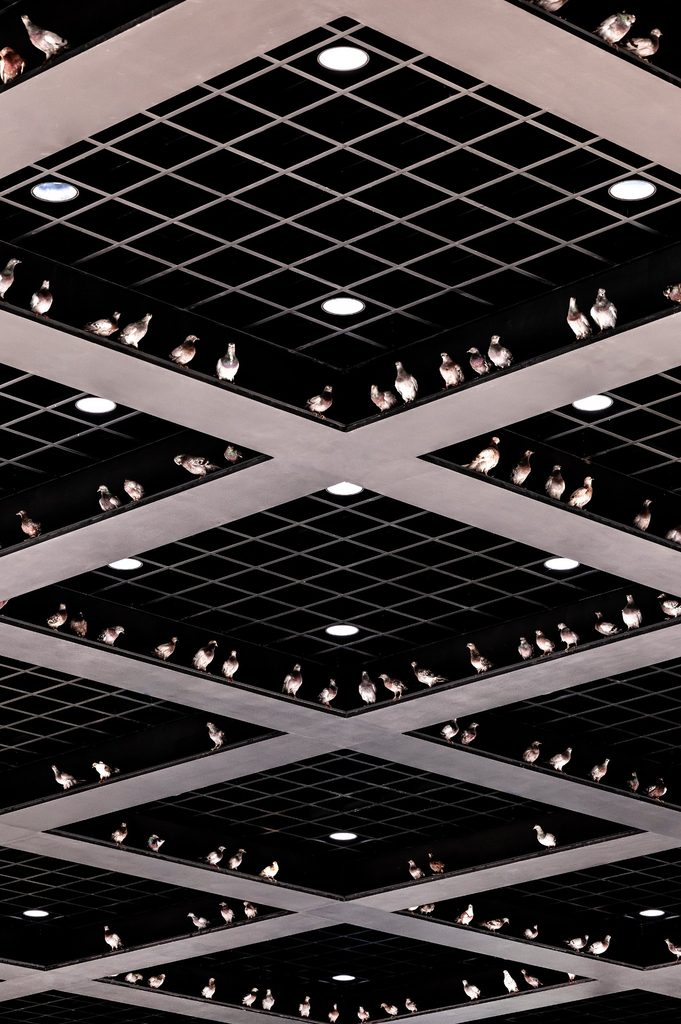
NIGHT also draws on Cattelan’s long-standing interest in images that resist a single interpretation, allowing irony and discomfort to operate alongside moments of stillness and reflection. The title does not describe darkness in a literal sense, but a condition in which certainty becomes less stable and familiar symbols can be seen differently. Within the context of Berlin, where public memory and historical representation remain deeply embedded in the city, this ambiguity gives the exhibition an additional layer of tension.
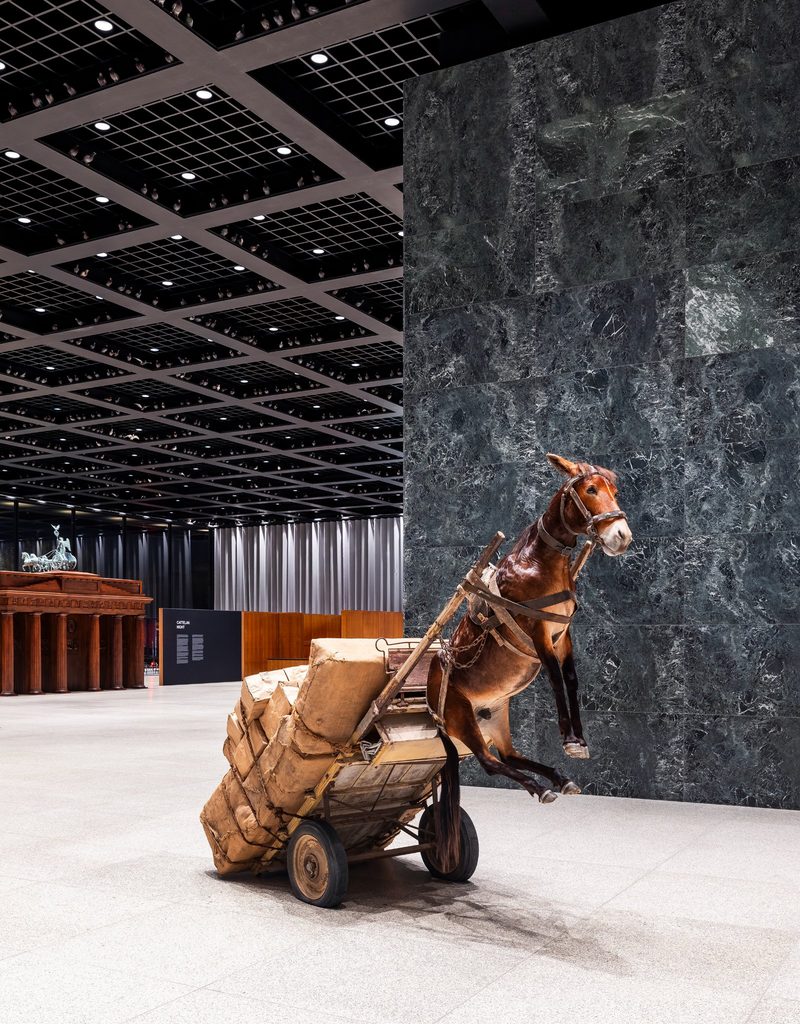
Curated by Lisa Botti with Klaus Biesenbach in close collaboration with Cattelan, NIGHT unfolds as a spatial composition in which architecture, sculpture and memory remain closely connected. By reducing the distance between exhibition design and artwork, the show turns the Neue Nationalgalerie into more than a setting, using the building itself to frame a sequence of encounters that move between monumentality and intimacy, visibility and concealment, recognition and doubt.
Interested in publishing your work?
If you are interested in having your work featured on Visual Atelier 8, please visit our Submission page. Once approved, your work will be presented to our global audience of professionals and enthusiasts.