TRIAS applies adaptive reuse and passive environmental strategies to Cloaked House
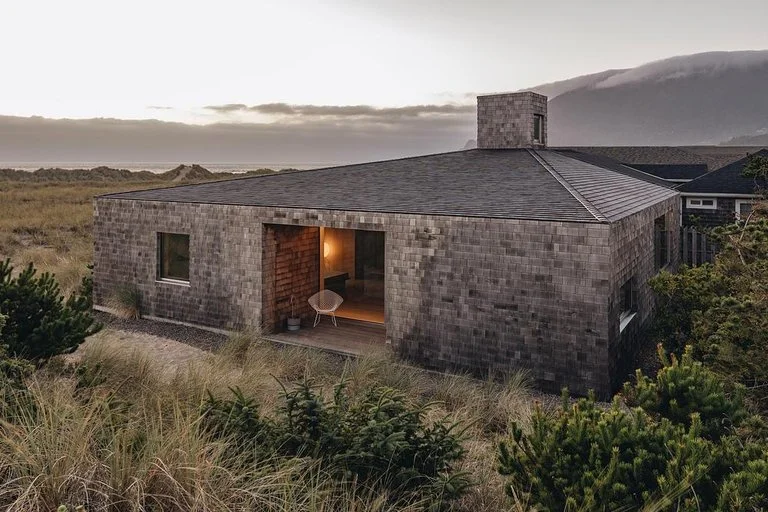
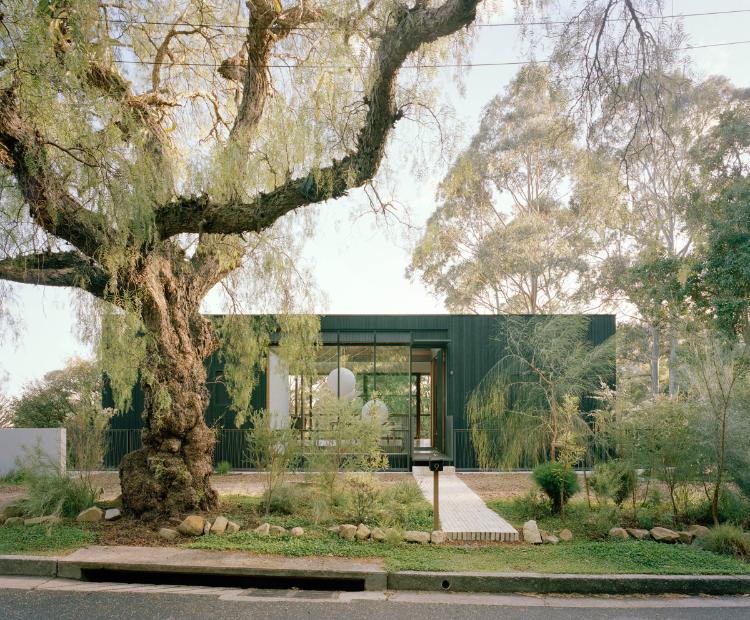
Cloaked House by TRIAS presents a carefully considered transformation of a deteriorated mid-century residence positioned on a steep bush block, advancing the argument that extending the life of existing buildings remains one of architecture’s most effective environmental actions.
See more residential architecture projects on VA8.
Related read from Visual Atelier 8: The North Face x HYKE 2018 FW Collection.
Related read from Visual Atelier 8: Nike PG3: Paul George’s Third Signature Shoe.
Initiated following the studio’s understanding of embodied carbon within structural superstructures, the project was approached as a radical renovation through alterations and additions, retaining the original structural skeleton while comprehensively reorganising interiors and exterior envelopes. This decision anchored the design strategy and informed the project’s technical and spatial logic from the outset.
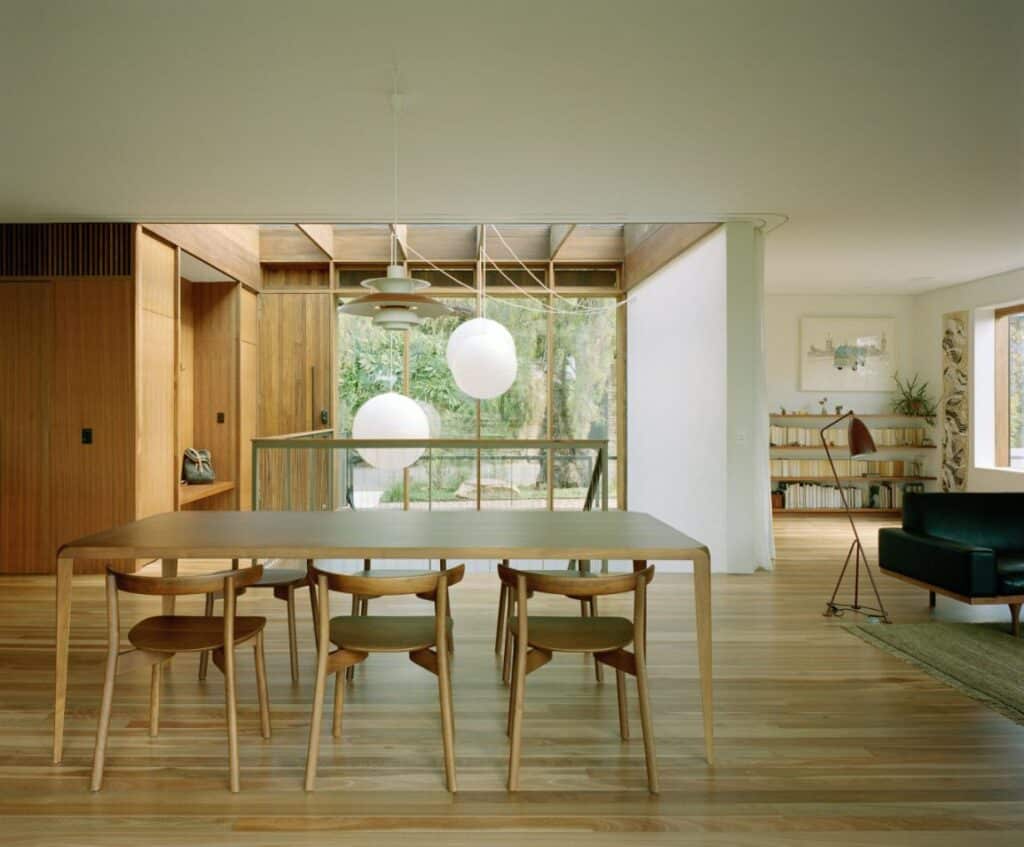
Commissioned by a family of four seeking a brighter, safer, and more welcoming home connected to its outlook and garden, the design process began with analysis of the degraded building and its context. Collaboration with structural engineers clarified which elements could be retained, while archival imagery revealed the dwelling’s owner-built origins influenced by the Sydney School.
These findings shaped an approach that repaired and extended the narrative of the original structure while acknowledging its quiet historical presence. The home is organised vertically across three levels, with the upper entry plane engaging winter sunlight and treetop views shared outward toward the street.
Sleeping areas below are proportioned for privacy and proximity to garden planting, and the lowest level adapts an undercroft into shaded external living territory with protective enclosure.
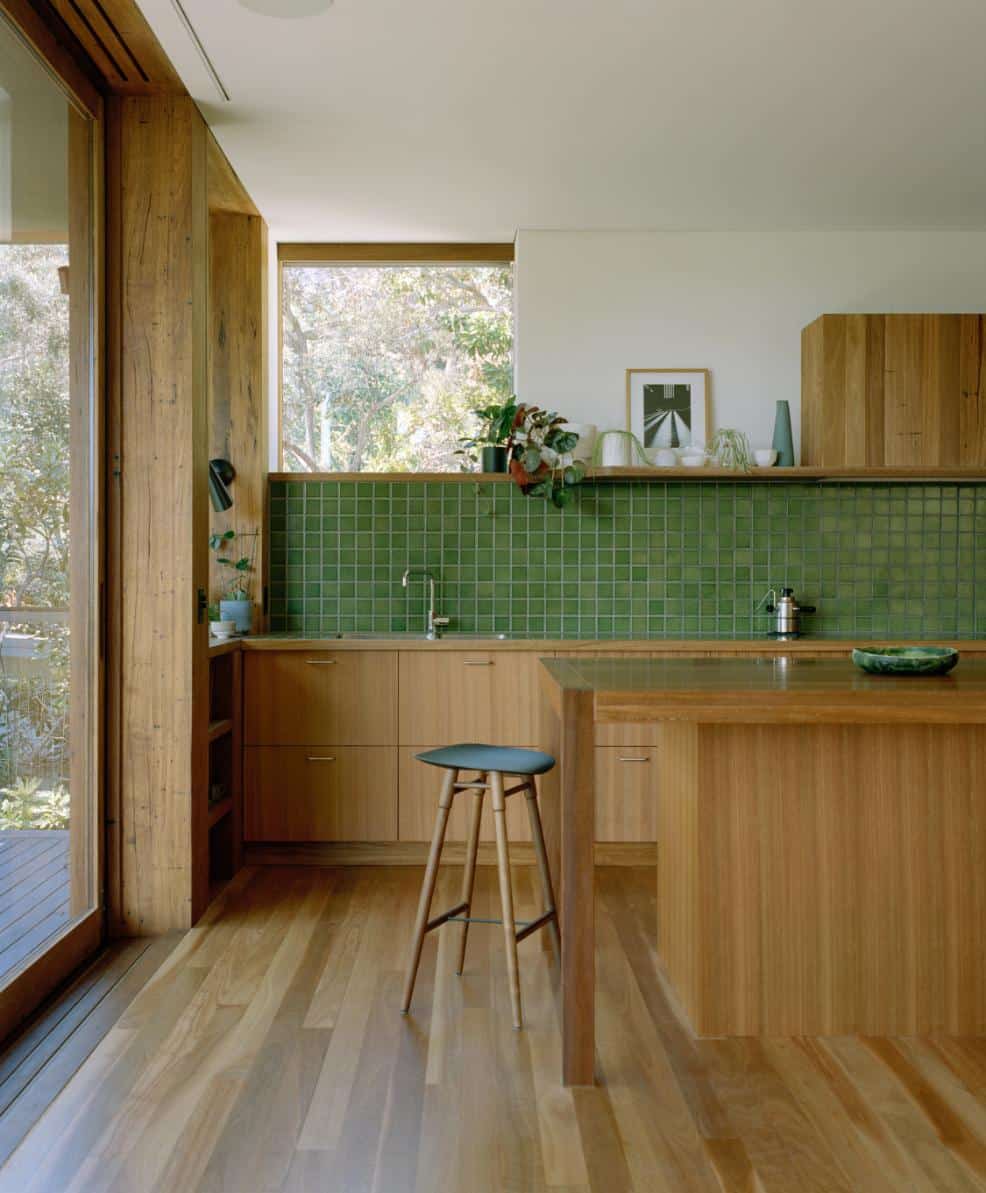
Construction stitched retained and new fabric together through reused timber, recycled blockwork, and recovered materials such as sandstone boulders and rafters. A hand-painted splashback and additional salvaged elements were reintroduced where possible, complemented by low-carbon selections that maintain continuity with mid-century detailing.
Passive environmental strategies were embedded throughout the envelope, including cross and stack ventilation pathways, seasonal shading responses, thermal mass utilisation, upgraded insulation, and double glazing. Rainwater harvesting further reinforces resource stewardship within everyday operation.
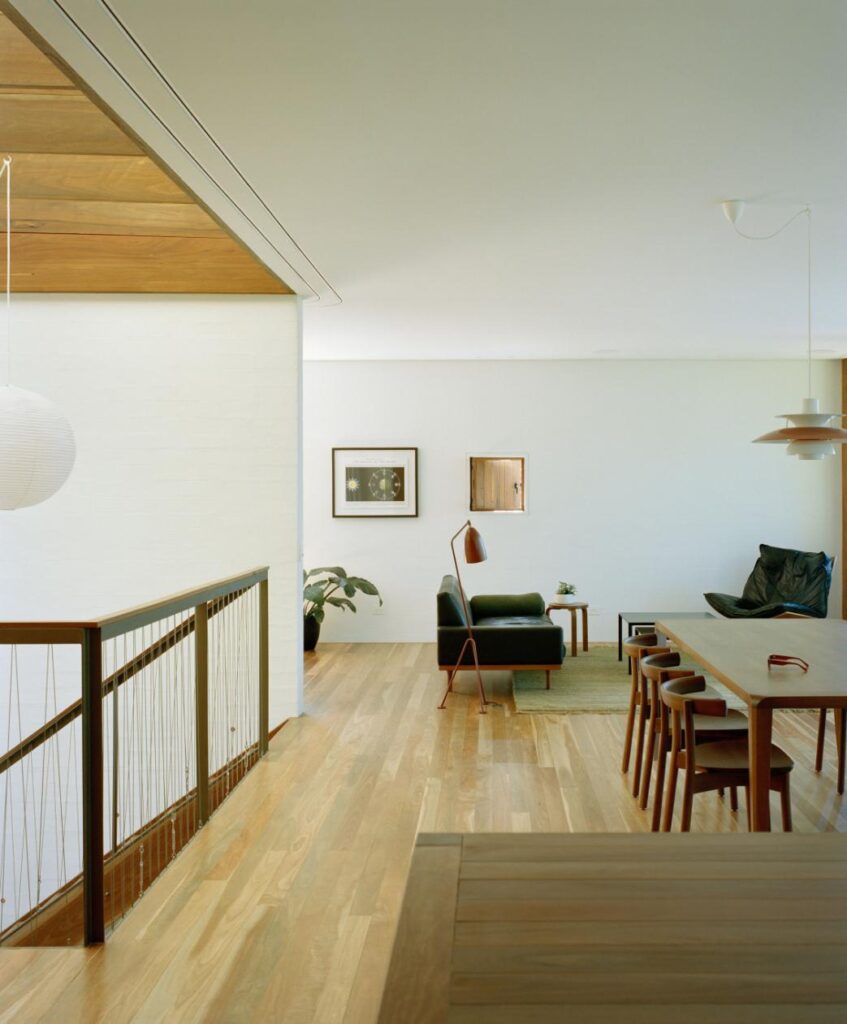
Spatial restructuring involved stripping the building to its shell, maintaining slabs, perimeter walls, and steel beams while reorganising rooms for improved adjacency and access to light and air. A central atrium courtyard introduces daylight and vegetation into interior depths, supported by reinstated balconies that reconnect occupants with canopy views.
Circulation flows through a reinstated stair linking living spaces to the garden. The TRIAS project’s title references the timber skin wrapping the facade, converting exposed blockwork into reverse brick veneer performance layers that enhance durability and moisture protection.
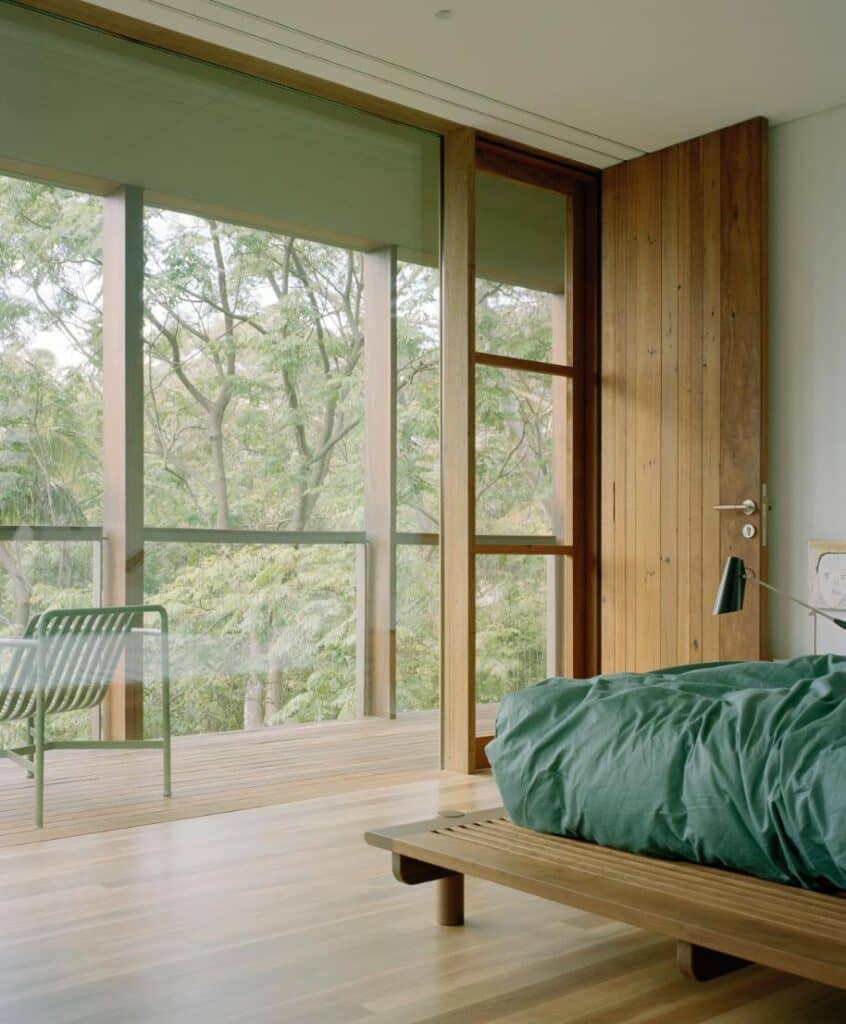
Landscape decisions prioritised minimal site disturbance, preserving established trees and introducing native species aligned with pre-colonial ecologies and neighbouring habitats. Thermal modelling guided envelope optimisation, reducing projected heating and cooling loads to roughly one third of benchmarks referenced by several climate performance guides.
Operational energy demand is addressed through an all-electric system powered by a 13.2kW photovoltaic array, supplemented by hydronic underfloor heating and chilled ceiling panels connected to an air-sourced heat pump.
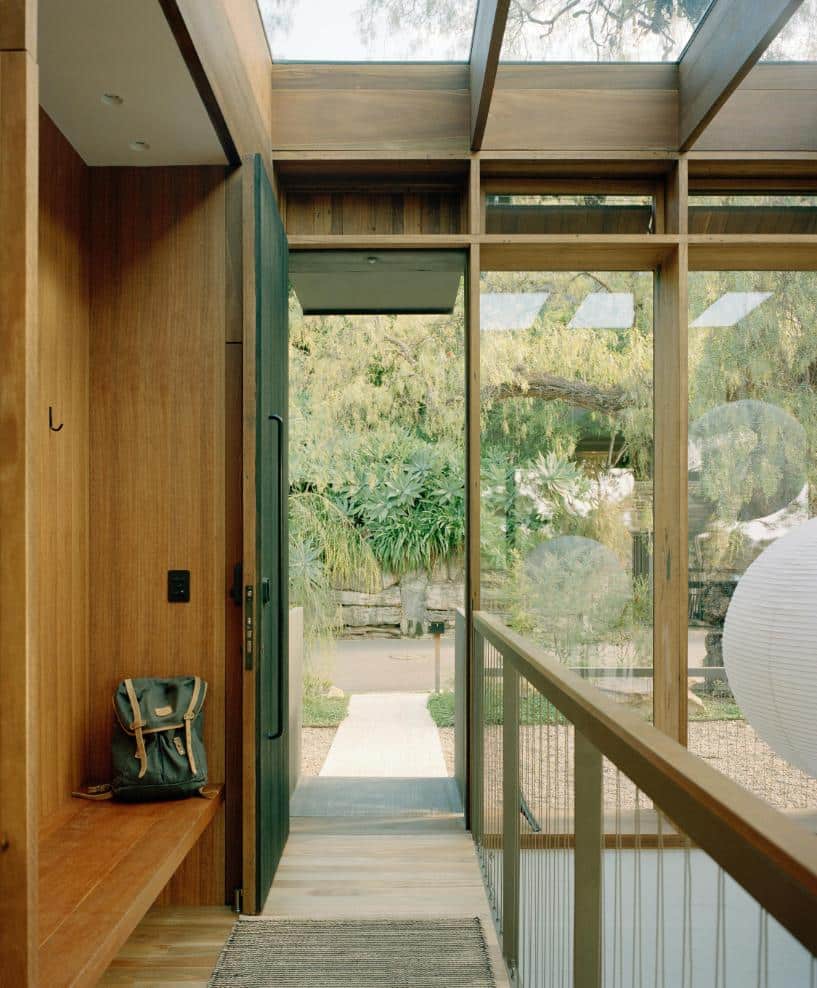
Life-cycle assessment indicates that retaining the structural framework avoided more than 20,000 kilograms of carbon dioxide equivalent emissions, reinforcing the project’s role in demonstrating the long-term value of resource-aware renovation.
Cloaked House reflects TRIAS’ commitment to sophisticated sustainability and demonstrates how architectural continuity and technical adaptation can extend the relevance and performance of existing housing in a climate-conscious era.
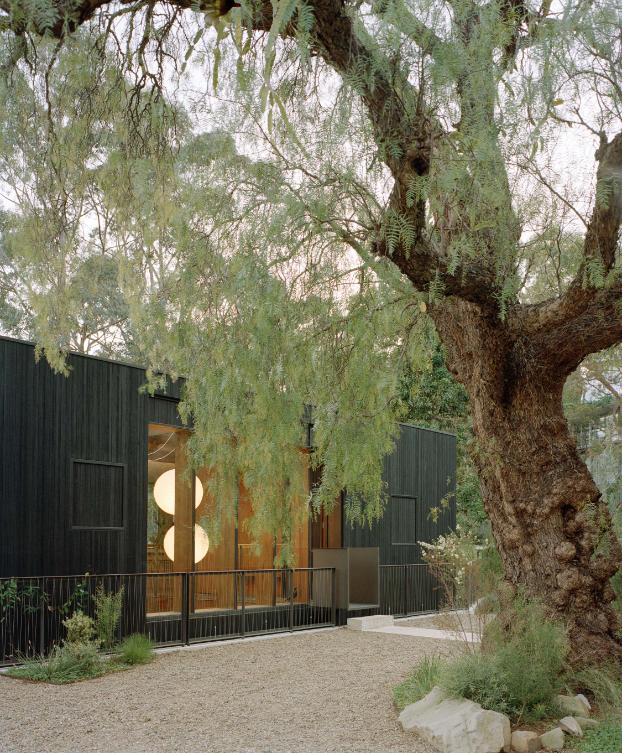
Photography by Clinton Weaver, with courtesy of TRIAS